Chef Tian's Tedious 16-Day process
4 comments

hwoo.lee
•
July 31, 2026
To respect Chef Tian’s wishes, I’ve intentionally omitted certain ingredient names, quantities, and proprietary details from this recipe. While it may feel incomplete as a result, it should still give you a clear understanding of the overall process he has spent more than 10 years refining.
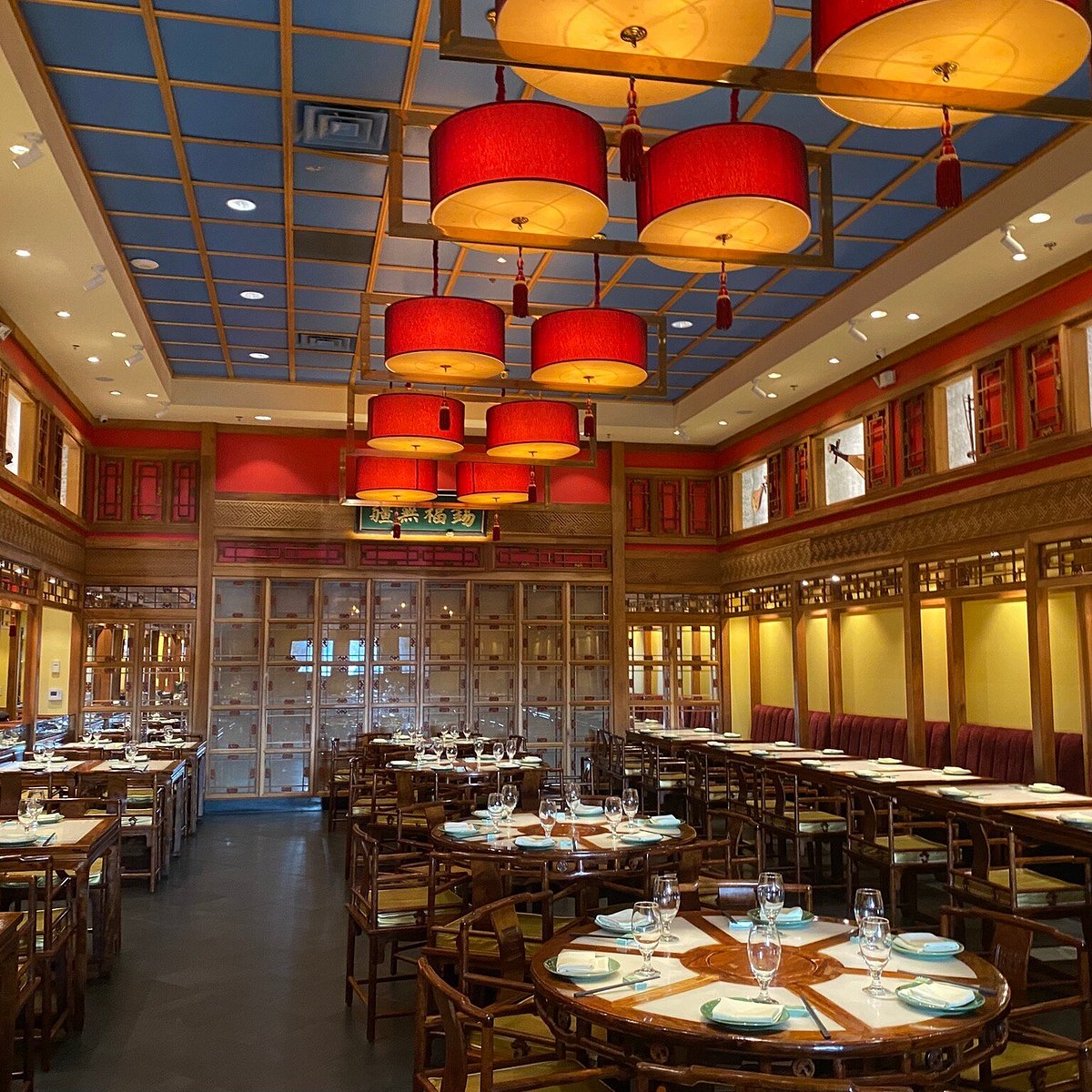
Bistro Na's is an iconic restaurant in the San Gabriel Valley, just east of central Los Angeles, specializing in Chinese imperial, royal Manchu cuisine.
To many people’s surprise, it is actually the first U.S. outpost of the Beijing-based restaurant group 那家小馆(Na Jia Xiao Guan). In 2016, the group expanded to North America and installed executive chef Tian Yong to lead the restaurant.
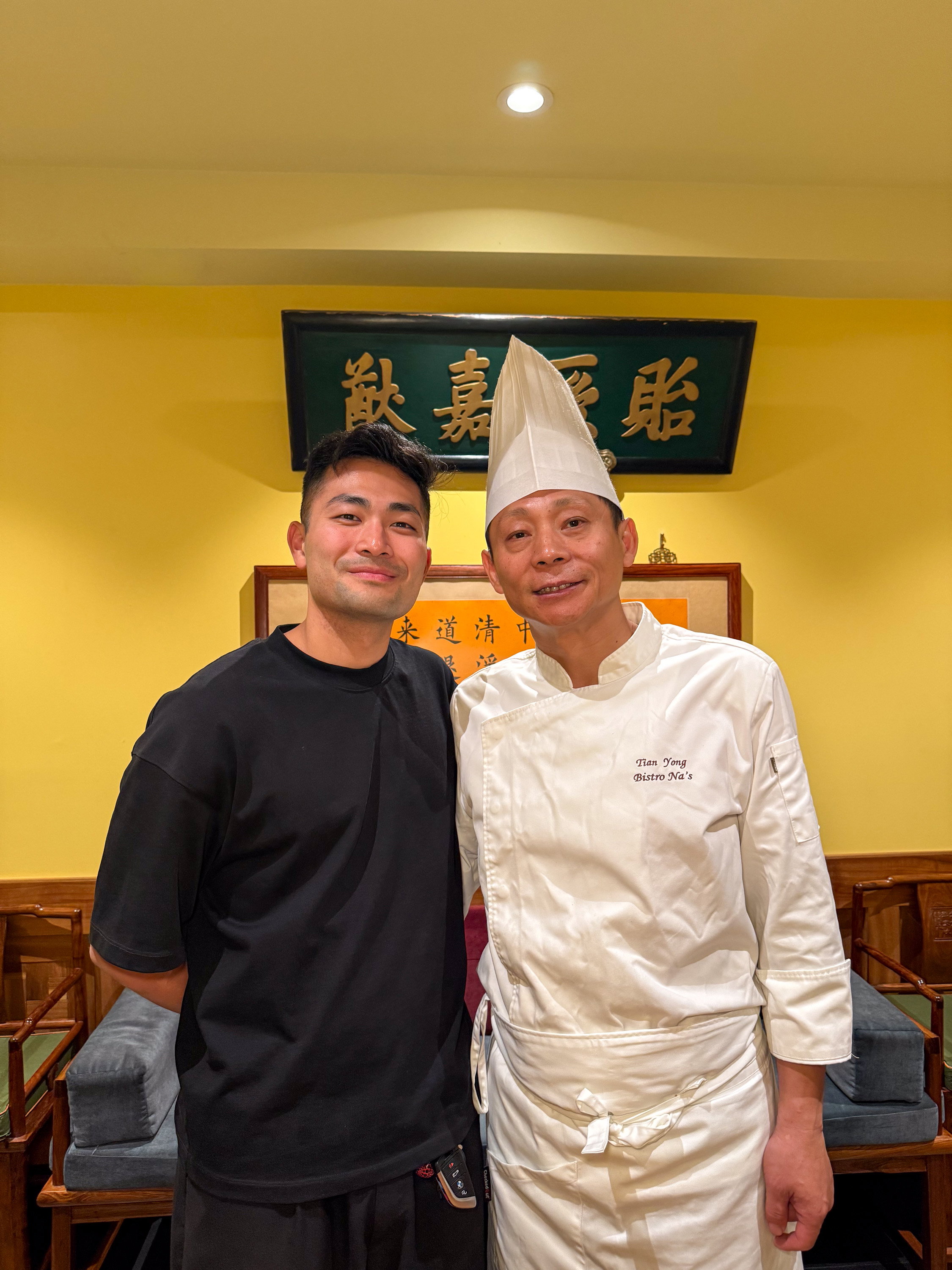
Chef is actually one of the sweetest and hardest working people I've ever met. Despite our language barrier, he was eager to teach me how he approaches Peking Duck and he answered every annoying question I had. Before I even came to shoot, he had prepared multiple ducks so he could walk me through each step of his incredibly tedious 16‑day Peking duck process.
Thank you again to Chef Tian, Jocelyn, and the entire Bistro Na's team for taking the time to teach me!
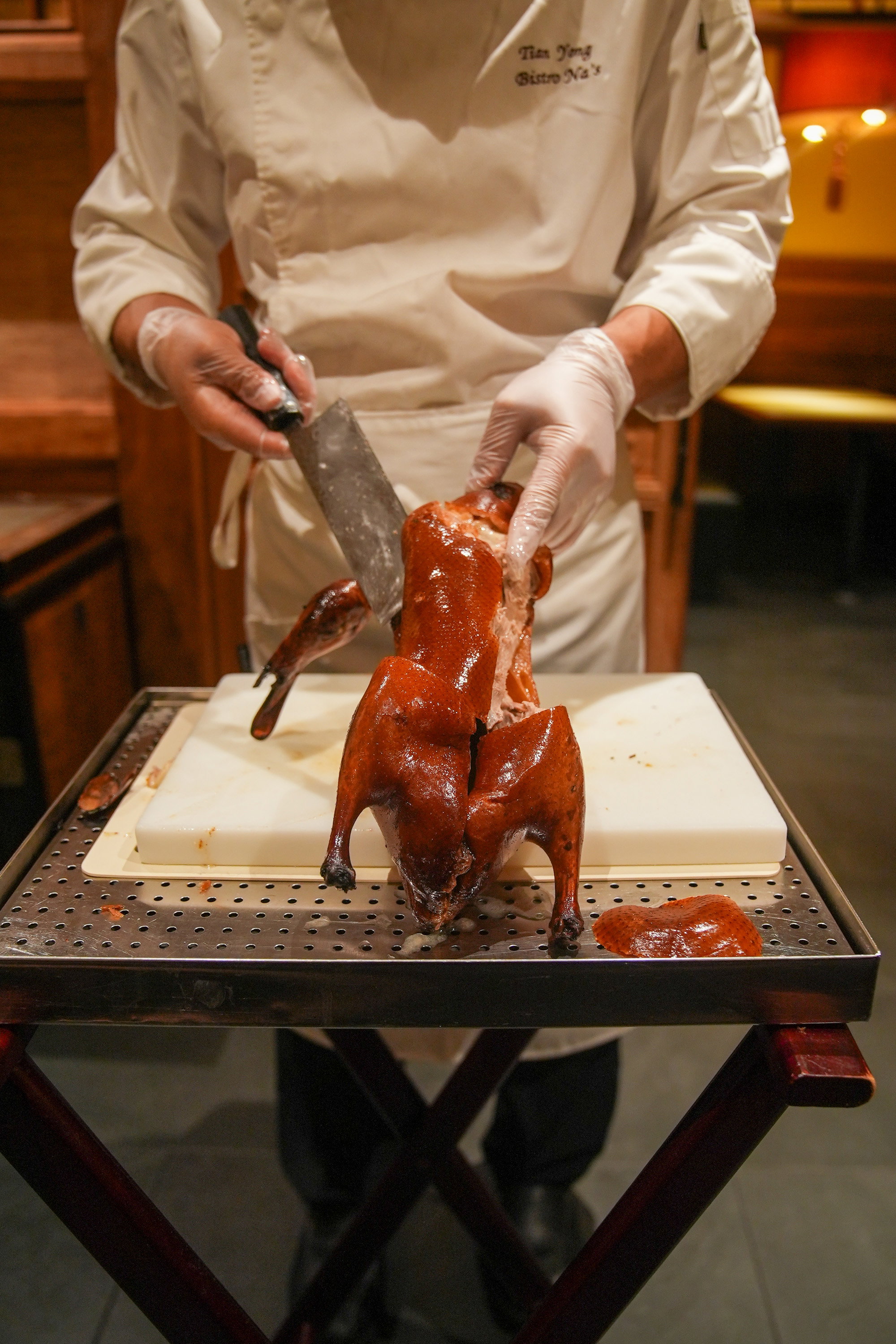
In my experience, this is the best Peking Duck I have had in the USA. Whether you agree or not, I’m confident you’ll gain a deeper appreciation for the dish after learning about Chef Tian’s philosophy and long relationship with it. So far, Chef Tian has devoted over a decade to cooking more than 3,500 ducks, and he continues to refine the dish every single service.
The ducks used in China are quite different from those raised in the U.S., so it’s virtually impossible to source the exact same bird here. Chef Tian spent around three years testing different suppliers before finally landing on his current duck, which is kept confidential and only available to him.
The ducks are raised to a specific size and harvested at roughly 30-Days. I noticed that his ducks are a bit smaller than other Pekin Ducks you'd find from other suppliers. For home cooks, I asked if the Pekin Duck from Wing On Market would be a good substitute, and he said yes.
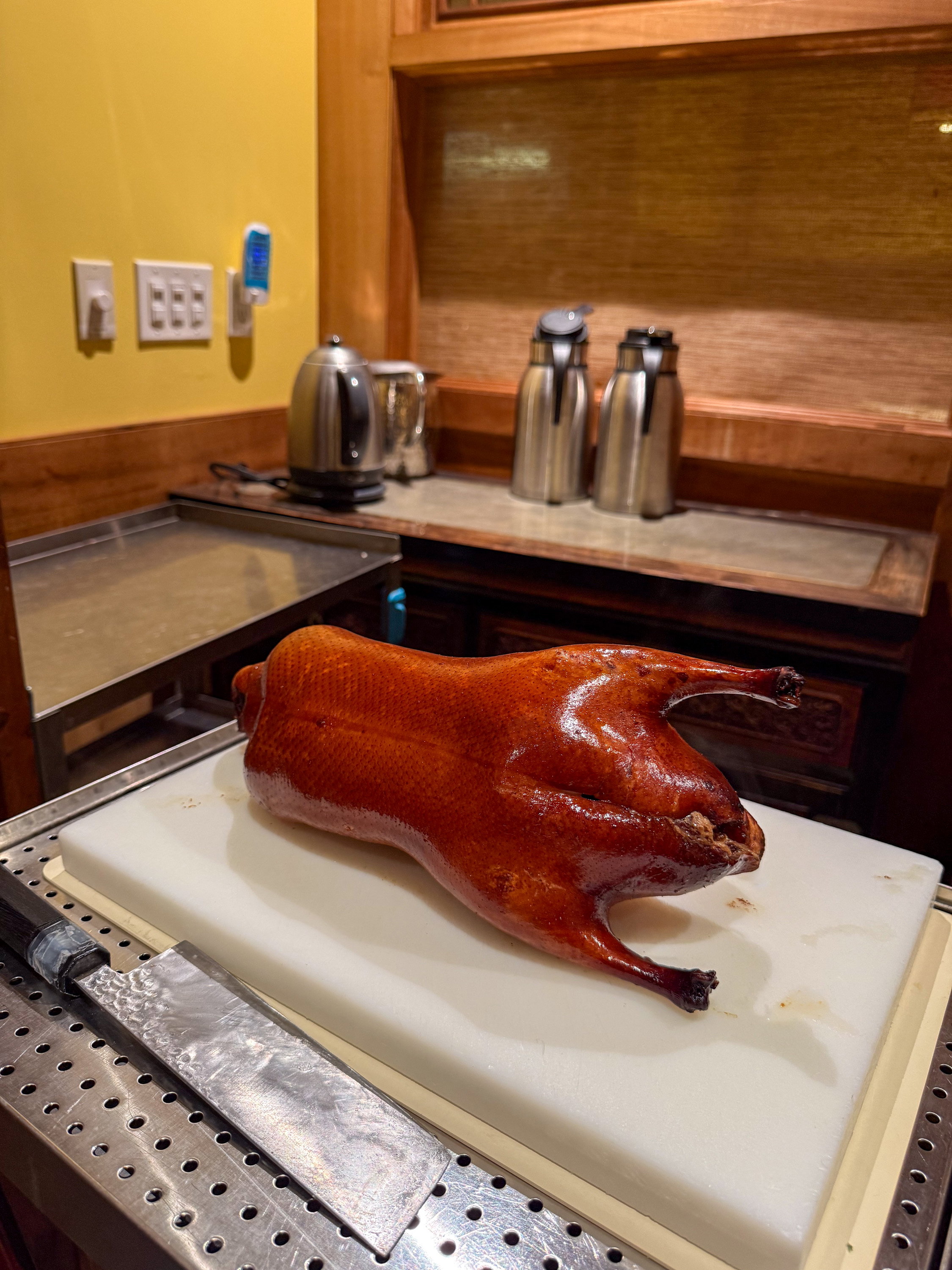
First off, Chef Tian’s duck skips the usual air-inflation step that separates the skin from the meat. Instead, he intentionally keeps the skin attached to the breast so both can be enjoyed together in a singular bite.
Second, he chooses to freeze his ducks. Chef explained that as the ducks freeze, expanding ice crystals subtly thicken the skin, which in turn allows the fat to render more cleanly when the duck is roasted.
Third, he made an Aromatic Mix that is used to help remove the gaminess and funk off the ducks. He also utilizes the vegetable trim, which would otherwise go to waste.
Lastly, he uses several proprietary crispy skin glazes that I’m not able to share. Some components are drawn directly from the batter used for Bistro Na’s famous Crispy Shrimp, so revealing the exact formulas would compromise that signature recipe. In general, most Chinese chefs have their own closely guarded Peking duck glaze, and Chef Tian’s approach is simply his personal interpretation of that tradition.
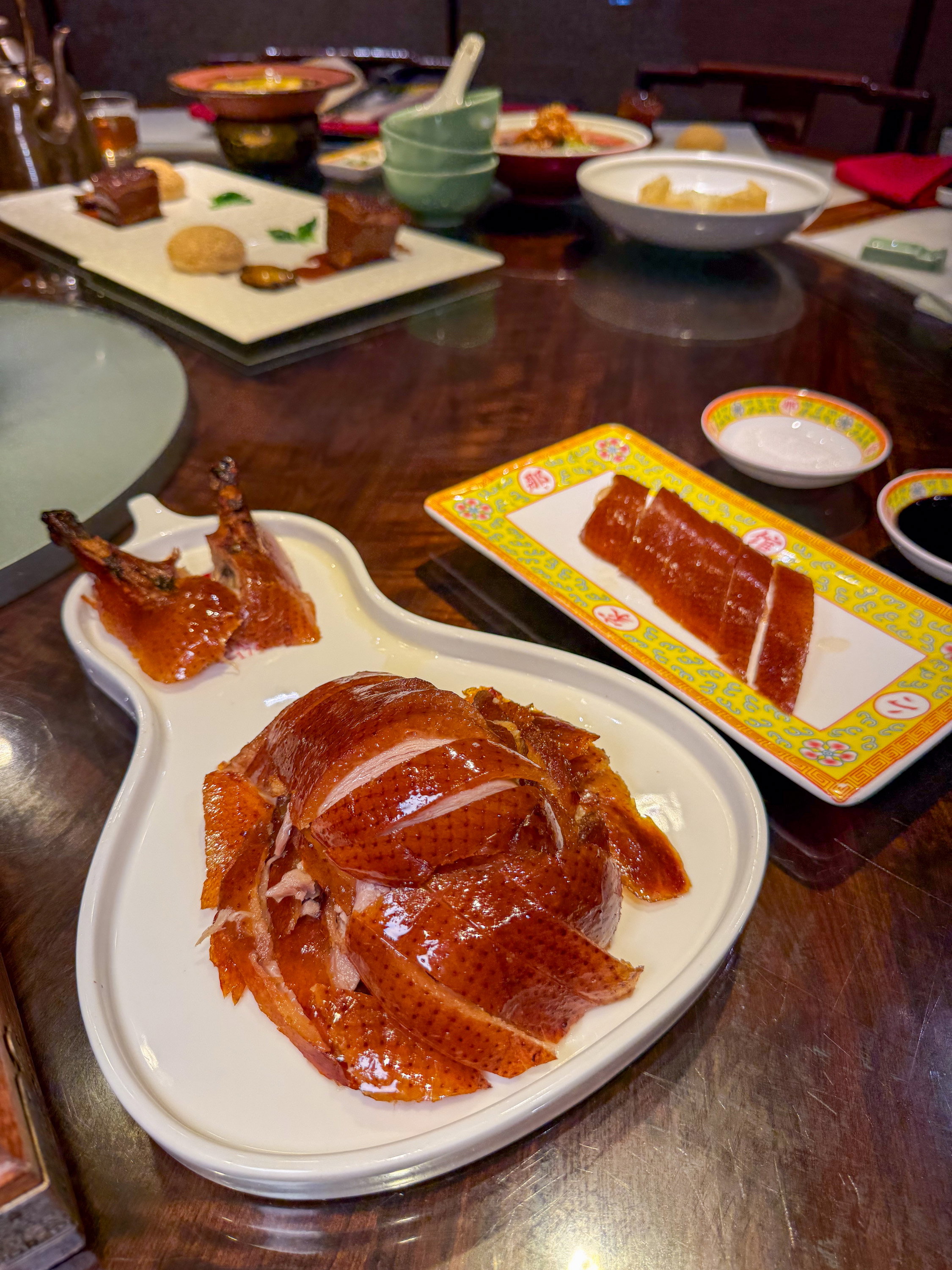
Peking Duck is arguably the most iconic dish in the world, so to make it at home is an elite flex. If you're really set on trying this, here is my honest advice:
Don’t get discouraged—this is a notoriously difficult dish. Good luck, and I’ll answer any questions in the comments below.
Remove the innards, the esophagus, or any debris from the inside cavity of the duck
Optionally, remove the skin around the duck's neck, above a few inches above the base/collar.
Salt the exterior skin of the duck, and rub to exfoliate and remove any impurities
Salt helps to remove any blemishes on the skin
In a large smooth-bottomed bin, pour white vinegar over the ducks, gently rub all over, and rest with the breast-side down.
White vinegar helps to whiten the skin, make sure it hits the breast skin to help whiten the presentation piece.
Let the duck soak for 1 hour
In a bowl, mix together the celery leaves, carrot, white onion, fresh szechuan peppercorns. Rinse with fresh water to cleanse, then drain.
Add a small dash of salt, this helps draw out moisture from the herbs.
Stuff the cavities of the ducks with the aromatic herb mix, place back in a bin breast-side down, and then cover with ice.
Similar to fish, keeping the duck on ice helps preserve freshness.
Subscribe to get my new recipes delivered to your inbox
Sign in to comment