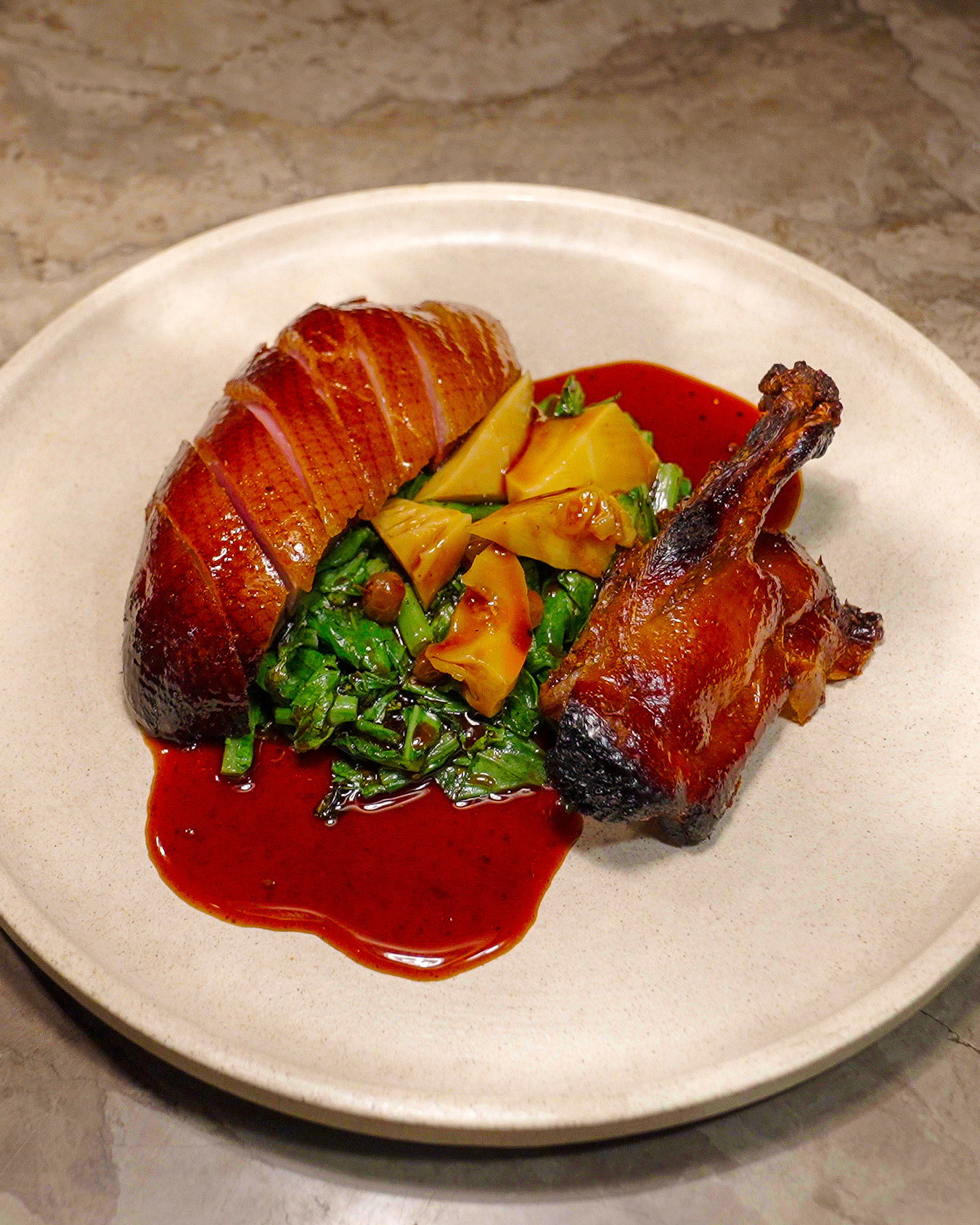
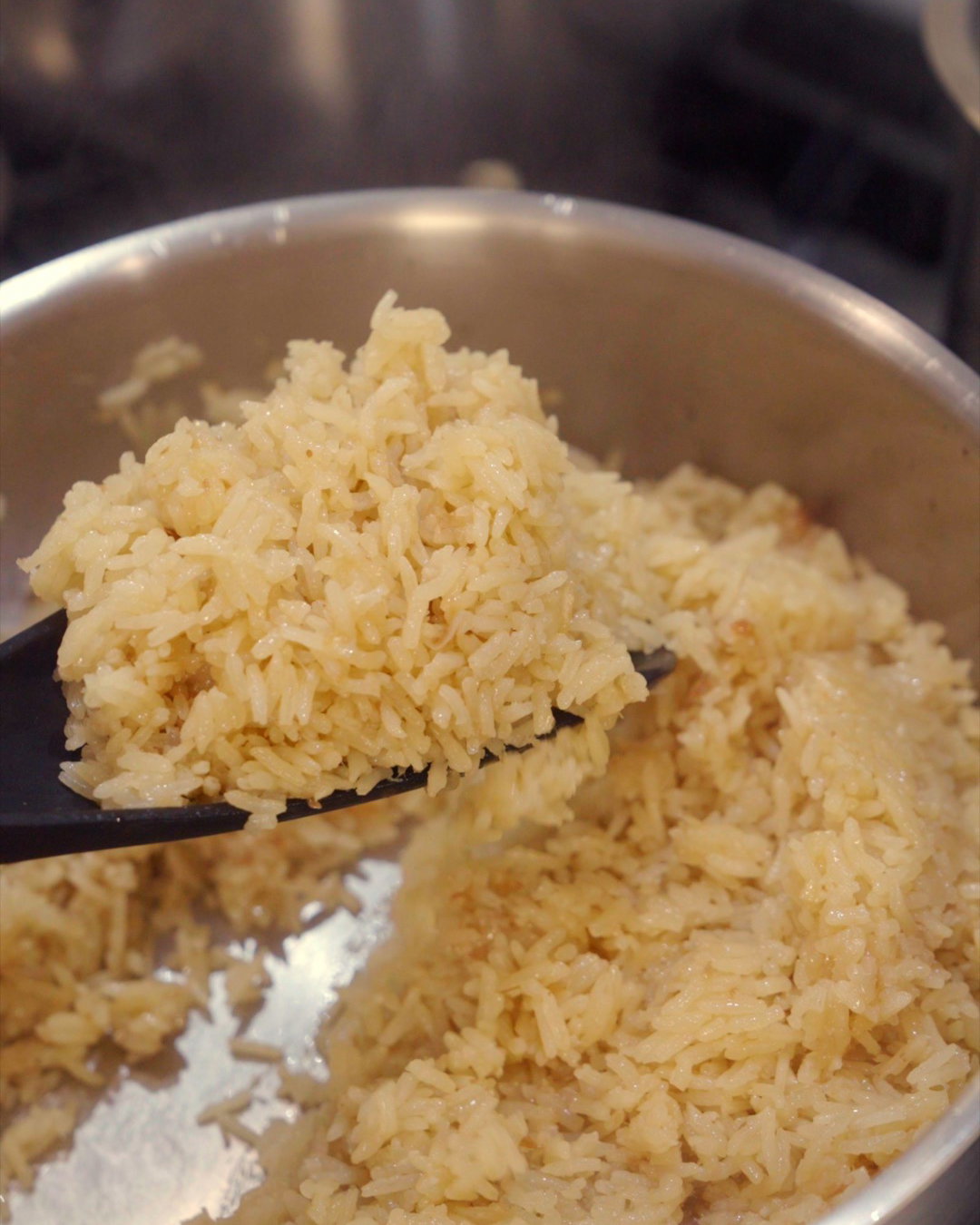
a dish adapted from SUGALABO, a Tablelog Top 100 Restaurant (Silver)

hwoo.lee•
March 20, 2026
In the culinary world, a stage (pronounced "stahj") is when you take an apprenticeship at a restaurant to get a hands-on learning experience (often unpaid or low-paying, sometimes with the intent to be hired full-time afterwards). It's fairly common to stage at multiple restaurants to learn different techniques and cuisines.
In March 2024, I staged for 5 weeks at a restaurant in Tokyo called SUGALABO. Run by Chef/Owner Yosuke Suga, SUGALABO is a French-Japanese fine-dining restaurant, that’s also invite-only. If you want to read more on SUGALABO, feel free to read here:
World's 50 Best - SUGALABO, Tokyo // Tablelog - SUGALABO, Tokyo
I was exposed to a variety of new ingredients and dishes, and this was a dish that particularly stood out to me.
Lotus Root (Renkon) is a starchy vegetable (technically a rhizome) that is common in Eastern cuisines. What I found interesting was that if you grind Lotus Root into a paste, it can be used as a dumpling dough. In Japanese cuisine, you can either steam grated lotus root, or in this case deep-fry it.
Manju doesn't technically translate into "Dumpling". It actually a common confectionery (wagashi) in Japanese cuisine. At SUGALABO, they called this dish 'Renkon Manju' because they stuffed it with duck (kamo). The resulting product was mimicking what manju is.
SUGALABO's 'Renkon Manju' used a specific lotus root from Kaga, known for it's higher starch content than most lotus root. It's so starchy that you don't need anything else except lotus root for the dough. In addition, the manju was stuffed with a miso duck ragu and a knob of foie gras. Surrounding the manju, is a thickened sauce of beef consommé, and it's garnished with sansho pepper leaves (kinome).
The dish is absolutely divine, borderline perfect.
My version is slightly altered for home execution. I can't get Kaga Renkon, so to mimic it's starchiness I added grated mountain yam (nagaimo) and potato starch. Ideally, you would use only grated lotus root for the batter. I rarely use foie gras, so I opted for the duck confit route, adding lots of saikyo miso and green onions. Instead of beef consommé, I made ankake, a thickened sauce made from dashi and kuzu starch. Fortunately, I am able to get my hands on kinome, but I'd recommend adding some grated ginger or wasabi to cut through the richness.
I think there are some tweaks needed for this dish, but overall I am quite happy with how it turned out.
Lastly, I want to mention that even though this dish is fried, it's not meant to be consumed "crispy". I notice that a lot of Western food tends to "pride" itself on the "crispiest batter" or whatever. A lot of Japanese food aims to fry, but then soak in a sauce - it's quite intentional).
For the equipment, I am using a Japanese mortar & pestle (suribachi and surikogi) to grate the lotus root, and a bamboo grater (oni-oroshi) for grating the lotus root (coarse) and mountain yam. If you have access to these tools, amazing. If you don't, try to use a box grater on the finest setting. Also, if you use a bamboo grater (oni-oroshi), make sure to soak in water before use (it'll help with grating).
Whisk together water (500 g), salt (10 g), dashi powder (10 g) until dissolved, and then brine duck legs (500 g) for 6-12 hours.
Once brined, pat dry, and confit in duck fat for 150-180min at 121 °C
Once cooked, allow to cool, and separate the legs evenly into meat, bones, skin, and cartilage. We will only be using the meat for this application.
Mix the duck confit (220 g) with saikyo miso (70 g) and scallions (15 g), season with salt if needed
Portion the mixture into 15g balls, and chill in the fridge covered until set
Peel, and soak Lotus Root (300 g) in Acidulated Water for at least 10-15min
Using a Suribachi, grate Lotus Root (300 g) into a fine paste. You can also finely mince the remaining Lotus Root (300 g) for some added texture.
You can do this all in a food processor as well. Be wary of putting too large of lotus root chunks into the batter or it may fall apart during the frying process.
Using an Oni-Oroshi, grate Nagaimo (60 g) and add to the Lotus Root mixture. Add potato starch (20 g) and salt (2 g) as well.
You can do this in a food processor as well. Be cautious of how much you blitz the mixture.
Subscribe to paid to comment