Japanese Steamed Egg Custard

hwoo.lee
•
July 1, 2026
If we're being honest, most things originate from China.
Chawanmushi can be traced back to the Chinese steamed egg dish, zhēng shuǐ dàn (蒸水蛋), which came to Japan through Nagasaki’s port-city trade. In the fusion-heavy shippoku banquets of the Edo period, that humble custard was reimagined with Japanese dashi and local ingredients, eventually evolving into the ultra‑delicate, tea‑cup custard we recognize as chawanmushi today.
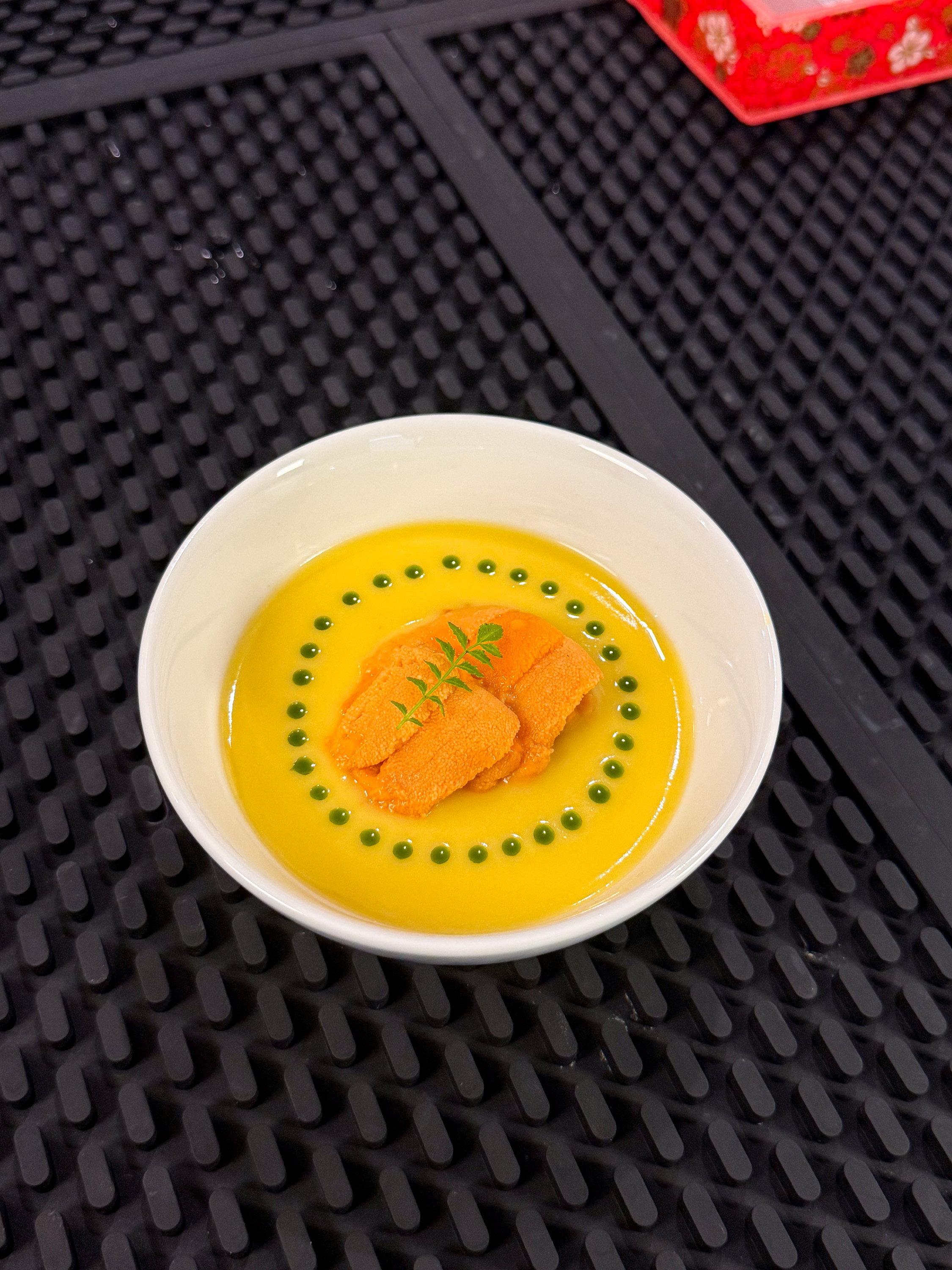
'Chawan' (茶碗) = Tea Cup/Bowl, and 'Mushi' (蒸し) = Steamed. Literally just means steamed tea cup or tea bowl. In a culinary sense, chawanmushi is always understood as Japanese steamed egg custard. If you've had a good chawanmushi, you'll know it's rather delicate, simple, and if done well, very elegant.
You will be able to find hundreds of recipes online for this dish, but I'd like to share the mindset I believe one should have when approaching Chawanmushi.
If you understand this, you will never need to read a chawanmushi recipe again.
With these three points in mind, you can make any alterations to your own Chawanmushi.
When I make Chawanmushi for pop-ups and services, it's easier for me to think in percentages and ratios. I typically use these ratios, with the % expressed by the weight of the main ingredient, eggs (it can change depending on dashi/season/sauces):
Feel free to change these ratios. If I am adding a seasoned Dashi Beurre Blanc on top, I will omit any salt and drop the Usukuchi Shoyu to maybe 3%. If I am using dashi powder, I will also omit salt (because dashi powders tend to have added salt and msg).
The recipe below is in Baker's Percentages, with Dashi set to 200% (of the weight of Eggs).
125% Dashi : I would drop down to 125% Dashi if I am trying to make a smaller, richer tasting chawanmushi that might need to hold up with a robust French menu. This would hold up better if I am adding a rich, seasoned Dashi Beurre Blanc on top. I may go less than my normal 80g portion size too.
200% Dashi : This is my standard. An 80g portion as an appetizer for dinner. It can still hold up to stronger french sauces, while using lighter dashi-based sauces. Sometimes I'll make a fat 200G portion for myself at home with this ratio too.
300% Dashi : If I want to pair this dish with a very light and delicate menu, or it has a light sauce on top, I would shift up to 200% Dashi. This will decrease the 'custard' flavor and allow other ingredients to shine.
Eggs are usually 50g each. I try to use the highest quality eggs I can find.
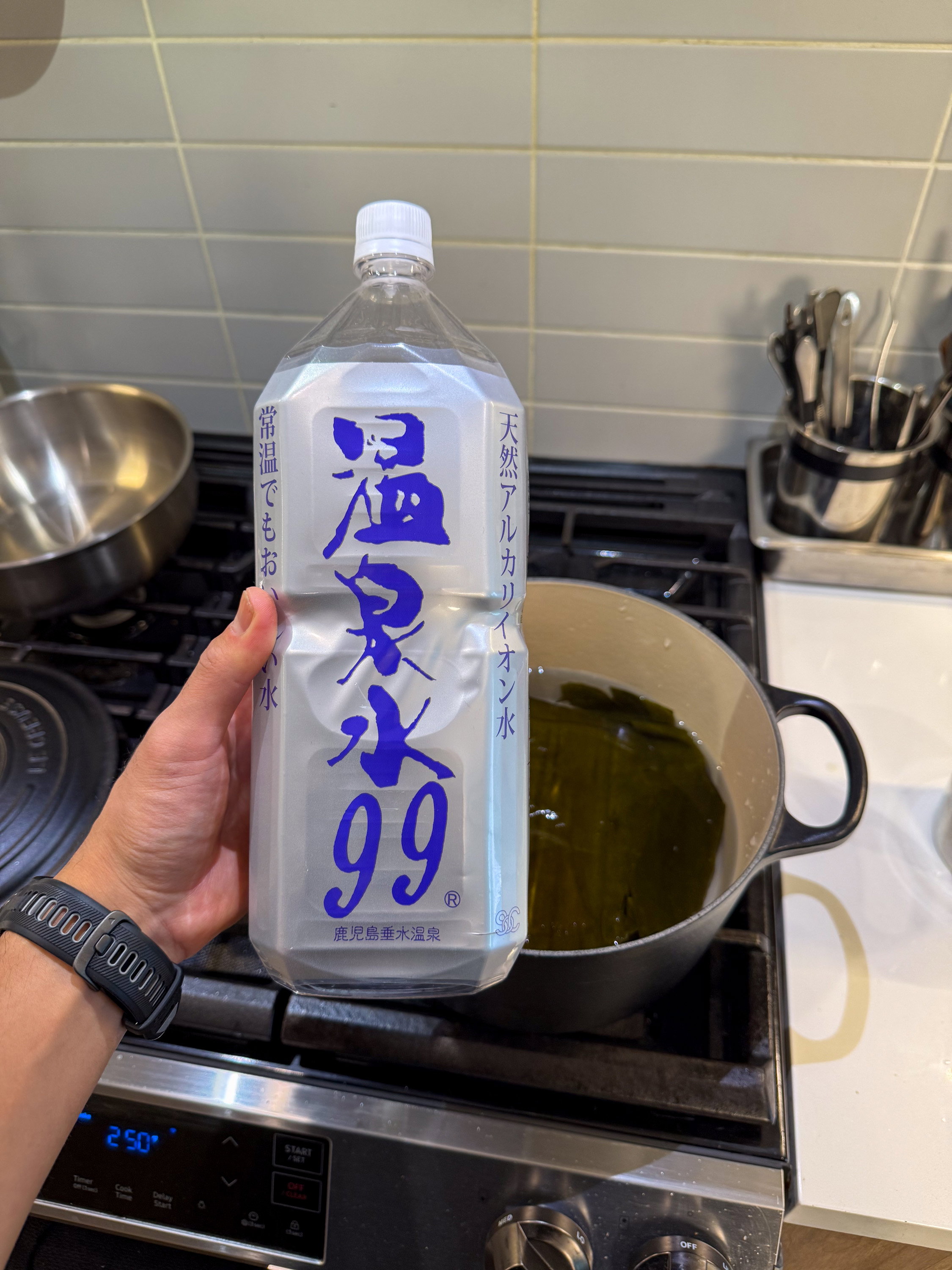
Dashi is by far the most important ingredient in this dish. I have seen many other chefs use chicken stock, vegetable stock, or dashi powder in water.
I do believe Usukuchi Shoyu (Light Soy Sauce) is important because it's lighter colored (allowing the chawanmushi to stay lighter colored). A second alternative is Shiro Shoyu.
I think 99% of people buy Aji-Mirin, which is actually isn't mirin, but a condiment made to taste like it. Try your best to buy Hon-Mirin or Mirin. I have been using a special type of Aged Namazume Mirin (Live Bottled Mirin) from Ogasawara Brewery called Isshi Soden. If you're able to get this, I highly highly recommend it.
If you were to survey a random set of Michelin/World 50 Best/Fine-Dining Restaurant menus in the world today, I am willing to bet that Chawanmushi would be one of the most popular dishes to appear on a tasting menu. With that said, there are so many variations to a savory custard, and many of these differ based off the garnishes, the stock used, or the ingredients inside. Even restaurants like Frantzen like to add cream to their chawanmushi base.
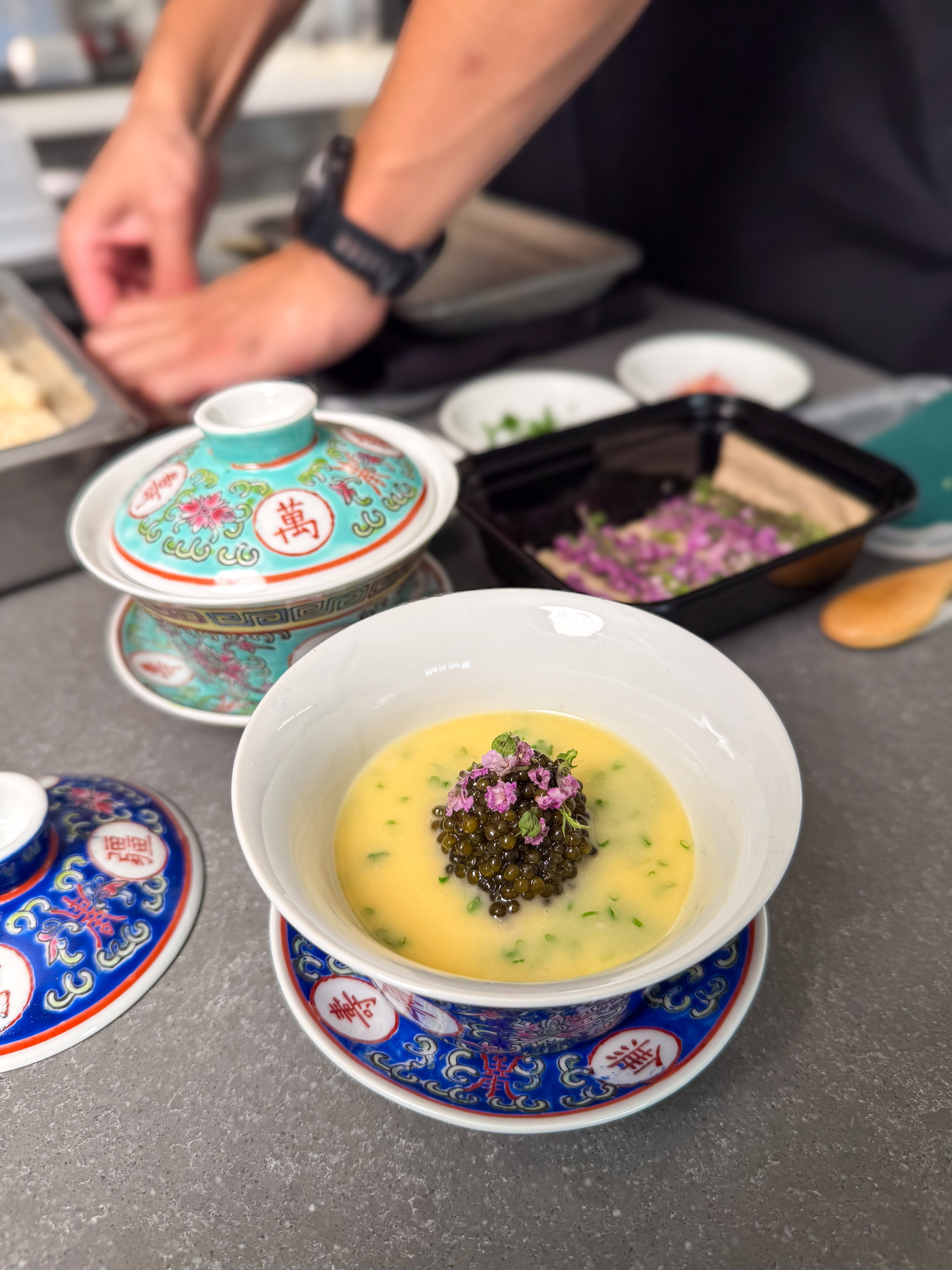
I think this is where many people "creatively roam" - they'll add their own sauce on top, various seafood, vegetables, etc. Currently, I've been loving this Dashi Beurre Blanc recipe on top of my chawanmushi with a large serving of Petrossian Caviar, Shiso blossoms, and chives.
Whisk the eggs (100 g) until completely homogenous and no loose egg white strands remain.
If you must, you can blend, but I would recommend an immersion blender to try and minimize any air bubbles created.
Make sure your dashi (200 g) is chilled completely before using.
In a large container, combine eggs (100 g), dashi (200 g), usukuchi shoyu (6 g), mirin (3 g), and salt (½ g). Whisk to combine, then strain through a chinois or fine-mesh strainer.
It is imperative that you strain this mixture to remove any strands of egg white or air bubbles. Removing these will result in a silkier texture in the end.
I recommend using this base on the same day, but I have used it up to two days after storing in the fridge. Just make sure to re-whisk the mixture as the egg tends to settle to the bottom.
If using a combi oven, set to 94 °C , 100 % humidity.
I have the ANOVA Precision 2.0 Oven, works great for this.
If using a steamer basket on top of boiling water, make sure it's a gentle steam (I'll lower the temp to about med-low heat after it's boiling).
It's a little difficult find a steamer basket that's tall enough for chawanmushi tea cups, since they're a bit tall.
If using a steamer insert inside a large pot, also make sure it's a gentle steam and the lid fits atop the chawanmushi cups.
Make sure your chawanmushi base is whisked, and also brought up to room temp.
Using a cold chawanmushi base is alright, it will just take longer than the suggested time to cook.
My Egg:Dashi ratio starts at 1:1.25 (by weight) and can go up to 1:3.0 - these days I float around 1:2.0
Subscribe to paid to comment